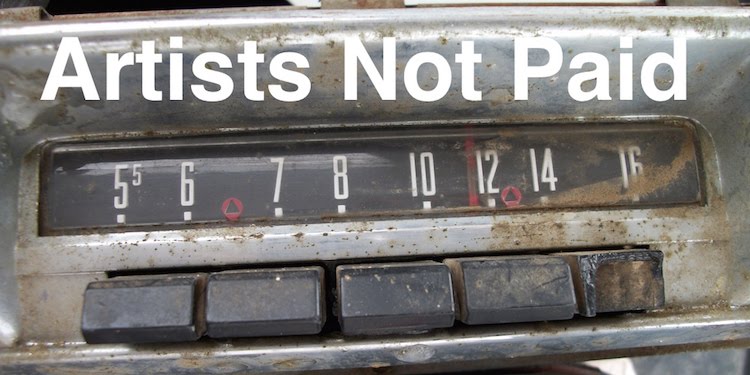
 Radio is still a big part of an artist's success, but did you know that an artist doesn't get paid for radio airplay in the United States? Songwriters get paid from money collected from broadcasters by ASCAP, BMI or SESAC, but there's no mechanism in place for an artist to get paid for the same airplay.
As an example, the Righteous Brothers "You've Lost That Lovin' Feeling" is the most played song on the radio ever, with more than 15 million plays since its release in 1964, yet the group never received a dime from all that radio play. The writers (Barry Mann, Cynthia Weil and Phil Spector) got rich, however.
Unbelievably, the U.S. is one of only 4 countries in the world that doesn't pay artists for radio airplay. More unbelievably, the other 3 are North Korea, Iran and China, none of which are exactly known for their artistic freedom or copyright protections.
So what's the problem in the U.S.? Lobbyists, to put it simply. The National Association of Broadcasters is very powerful and contributes to many political campaigns, so they've always managed to quash any legislation that gets introduced to Congress.
The NAB has always threatened that radio and television stations would go bankrupt and be forced to go off the air if legislation was passed mandating them to pay artists for playing their songs, all while the industry was raking in billions of dollars of profits.
Sadly, this situation won't change soon, mostly because radio is in a true downswing (especially AM) with advertisers moving their money away from radio to social media instead (streaming platforms do pay artists for airplay, by the way).
Radio still helps break a song as millions of people continue to listen at work and in their cars, but it's mostly from the top 1% artists or those backed by the major labels. It's irrelevant to young artists and bands since airplay is out of reach.
While the rates seem low, music streaming is an artists friend, since at least you get paid something. Because unless you're the writer, you're not going to see any money from radio airplay. And at least online is a place for a young artist to build an audience, since local radio (once the champion of local music scenes everywhere) barely exists anymore, and many colleges have shed their terrestrial radio stations.
For a deeper look into the subject, check out this article on Medium from CD Baby's CEO Tracy Maddux.

